Industrial TFT Displays

Full Array Local Dimming Displays
Industrial TFT Displays

Full Array Local Dimming Displays Revolutionising the Automotive Industry

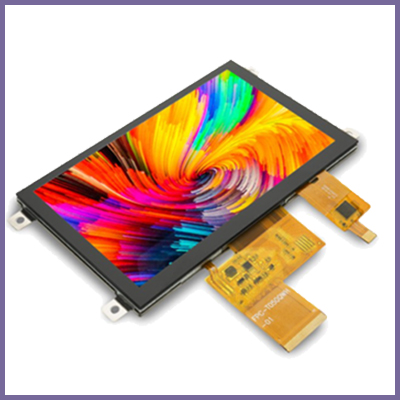
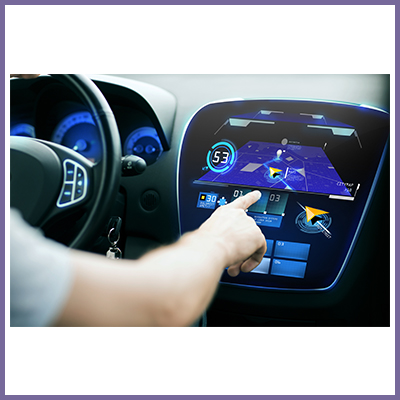
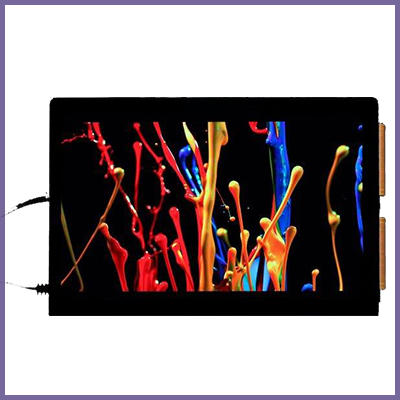
Full Array Local Dimming Displays Revolutionising the Automotive Industry The Advantages of Full Array Local Dimming Displays (FALD) and how they are revolutionising the automotive industry among others Introduction to Full Array Local Dimming Displays (FALD) As technology continues to evolve at an exponential rate, the automotive industry is no exception to the transformative wave. One such innovation that has the potential to revolutionize in-car displays is Full Array Local Dimming (FALD) technology. FALD displays have already made a significant impact in the consumer electronics market, especially in high-end televisions, and integrating this technology into vehicles can unlock a myriad of benefits. In this blog post, we’ll explore why the automotive industry could use and benefit from integrating FALD displays. What is Full Array Local Dimming (FALD) Technology? FALD is an advanced display technology that enhances image quality and contrast by independently controlling the brightness of specific areas (zones) of the display. Unlike traditional edge-lit displays, where LEDs are placed around the edges, FALD panels feature a grid of LED backlights positioned across the entire screen’s backplane. This enables precise control over the illumination of individual zones, resulting in deeper blacks, higher contrast, and improved overall picture quality. The Potential Integration of FALD in Automotive Displays Enhanced Image Quality One of the most significant advantages of integrating FALD displays in vehicles is the substantial improvement in image quality. This technology allows for more precise control over brightness levels in localized areas, leading to better contrast and more vibrant colors. Whether displaying navigation maps, rear-view camera feeds, or entertainment content, FALD ensures that drivers and passengers can view images with remarkable clarity, even in varying lighting conditions. Improved Safety and Visibility Safety is of paramount importance in the automotive industry. FALD displays can play a crucial role in enhancing safety by optimizing visibility for drivers. The localized dimming feature helps reduce glare and reflections on the screen, minimizing distractions and enhancing focus while driving. Moreover, FALD’s ability to produce deeper blacks improves night-time visibility, making it easier to read essential information without straining the eyes. Energy Efficiency FALD displays are remarkably energy-efficient compared to traditional displays. By dimming specific zones when displaying darker content, FALD consumes less power than uniformly illuminating the entire screen. In an electric vehicle (EV) where energy conservation is crucial for extending driving range, FALD can contribute to a more efficient power management system. Customization and Aesthetics Automotive manufacturers constantly seek to differentiate their vehicles by offering unique user experiences. FALD technology provides an avenue for greater customization and aesthetics in the interior design of cars. With FALD displays, automakers can experiment with customizable ambient lighting, which adjusts according to the vehicle’s interior and the driver’s preferences, enhancing the overall driving experience. Future-Proofing Technology Integrating FALD displays in vehicles represents a forward-thinking approach to technology adoption. As automotive technology evolves, FALD will continue to remain relevant and adaptable to emerging display standards and content formats. This future-proofing characteristic ensures that vehicles equipped with FALD displays will continue to provide an immersive experience for years to come. Conclusion and why you should implement FALD displays Full Array Local Dimming (FALD) displays have already proven their worth in the consumer electronics market, and it’s time for the automotive industry to harness their potential. By integrating FALD displays in vehicles, automotive manufacturers can elevate the driving experience, improve safety, and enhance energy efficiency. The benefits of FALD, such as enhanced image quality, customization possibilities, and future-proofing, are compelling reasons for the automotive industry to embrace this technology. As FALD technology becomes more accessible and cost-effective, we can look forward to a new era of visually stunning and safer driving experiences on the roads. CLICK HERE TO SEE OUR LINEUP AND ALSO PRODUCTS THAT ARE COMING SOON TFT LCD Panels from CDS https://www.youtube.com/watch?v=_FPzGZqrh9g&t=1s CDS Optical Bonding Solutions https://www.youtube.com/watch?v=42HlVKgrblM Call us today +44 (0) 1634 791600 Send us an email for more information info@crystal-display.com
Challenges of Military Touchscreens
Industrial TFT Displays

Challenges of Military Touchscreens

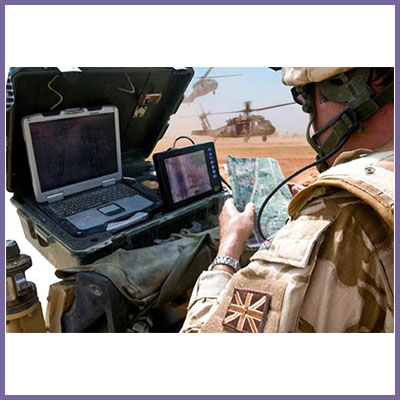
Challenges of Military Touchscreens CDS addresses the Challenges of Military Touchscreen solutions Military Touchscreens When it comes to military environments, one issue arises repeatedly: viewability. The need to have the maximum clarity and purest blacks is often a key demand. So how does this impact touchscreens? Well, most touchscreen technologies, aside from IR, require some sort of coating on the surface of the touch interface, or glass that can affect the degree of light transmission. Ah yes, you say, but military displays almost always need some sort of coating anyway, don’t they?  Well yes, this is indeed often the case. However, the layers needed to make the touchscreen operate are typically thicker and less optically pure than the specialized filter lays used by the military. For example, the ITO layers used in PCAP touch components can reduce optical transmissibility by up to 30%. Touchscreens that use pure glass are the option to be considered when clarity is a high priority. These are typically traditional IR, and they present their own challenges.   Apart from optical considerations, there are other parameters that become key in military equipment. Depending on the operational environment, there can be EMI interference, ambient light issues and mechanical noise/vibration to be concerned about. Overall reliability is a big concern, of course. NVIS compatibility is often a factor too and can be very challenging when it comes to the newest versions of NVIS devices. PCAP touchscreen layers example   In this example, at least five layers have been added between the display and the viewer. Whilst the ITO layers have reasonable optical clarity, they do affect display quality, and may even affect viewing angle. Each of the fine ITO layers is made up of semiconductor material and has the effect of blocking out some degree of light. Think of them as the bug screen on your window, you can see out with the screen in place, but it is blocking 30 – 50% of the light.  Additionally, layers of insulation may be needed to attempt to mitigate electrical noise, adding more complexity and giving rise to distortion of the image on the display. [Figure 2]   PCAP insulation layer touchscreen-example PCAP touchscreens are also sensitive to electrostatic noise and interference. Despite many methods used to dampen or remove the effects of electrostatic noise, the fact remains that the almost invisible matrix used to sense touch is also akin to a big antenna array.   Resistive Touchscreen Technology Resistive technology is often used in various touchscreen technologies. Resistive can be less expensive and is reasonably accurate and responsive. Whilst this type of technology has improved over the years and has been used in various military applications, it shares many of the disadvantages of PCAP, and adds a few of its own, however.   For example, resistive screens require a certain amount of activation force, typically 60 – 80 grams. Whilst this may not sound like much, if being operated by a gloved finger, considerably more force is required to compensate for the compression of the glove material. This need to be sure to press hard enough raises response times and makes room for errors. Resistive technology uses layers in a matrix in much the same way that PCAP does. However, even the best quality resistive touchscreens need more layers than their capacitive counterpart, meaning even more light is blocked as it passes through the device.   Resistive touchscreen layers   Not only is optical clarity more compromised, but there are also now more layers to potentially fail.  This technology also relies on an electrical matrix to function and therefore suffers from the same potential for electrostatic interference as PCAP. Resistive screens are also prone to single-point failures. Because mechanical force is needed to make a contact, repeated operations in any given location can possibly cause a failure at that point InfraRed Touchscreen Technology InfraRed sensing has been around for decades. Beam-break touchscreens (traditional IR) are very effective and do not require anything more than a sheet of glass as a touch surface. IR touchscreens can be very responsive, and they are also less expensive to manufacture.  At its simplest level, it is one IR light source, and one IR sensor or receiver. [Figure 4] This setup creates a beam that, if broken by something passing through it, triggers a circuit.     However, traditional IR touch screens suffer from significant issues and limitations that make them a less than perfect choice for a high-reliability environment. Among these are their susceptibility to external lighting conditions. Infrared light can be found in sunlight and from many other sources, for example, and when such “stray” IR enters the touch screen, it can cause false readings and ghost touches. Attempts can be made to minimize this by adding a douser or cover (see Figure 4) over the IR receiver, kind of like a sunshade, but this has a limited effect.  In a high-flying aircraft cockpit, for example, the sunlight will shine brightly through the glass and will reflect off of many surfaces.   Another problem with IR beam break is limited resolution. Because you need pairs of light sources and receivers, these components have a finite size and need to be mounted onto the PCB. This means that resolution is limited to the spacing of the components. There are also implications for reliability. If anyone light source or receiver fails, particularly in a critical location, the touchscreen will fail to work as required.   So, is there any one solution that can minimize the potential problems of the technologies above?   As we all know nothing is perfect, but one solution, ShadowSense by Baanto International, overcomes many of the issues presented by other technologies.   What is ShadowSense? Baanto ShadowSense touch technology is an innovative and patented optical position sensing technology. ShadowSense designs use high-performance sensors operating in the analogue domain to provide unprecedented performance, stability, and accuracy. ShadowSense requires only plain glass as a touch surface, thus allowing clearer optical paths

Healthcare displays from CDS
Industrial TFT Displays

CDS offers Displays and Touchscreens in the Healthcare sectors

CDS offers Displays and Touchscreens in the Healthcare sectors CDS has increased its display range of Displays and Touchscreens to better support the Healthcare sectors As we know the healthcare sector is constantly changing as they look for any technological advantages and improvements they can find, and touchscreens are no exception as they become more prevalent. Some have thought this only in the USA which has a huge private health service, but touchscreens are now becoming more prevalent all around the globe as they offer many advantages. Touchscreens are an important part of how this change is occurring in the healthcare sector and we can see how some of the major ways touchscreens are impacting healthcare: Self-service information point touch screens improve check-in times in clinics, Doctors surgeries and hospitals for 3 in 4 patients and improve wayfinding within hospitals. New processes for quickly categorising and diagnosing patients are now possible with touchscreen “reception” desks which improve the efficiency of seeing patients. Applications such as touchscreen-enabled bedside terminals and psychiatric care screens are now integral parts of the care systems of many clinics Hospitals are also beginning to use touch screens to improve accessibility, including “dimpled” touchscreens for visually impaired users. Touch screens can considerably improve hygiene when compared to traditional buttons in medical devices and technologies. Rapid identification of Health Needs Touch panels can also provide a valuable way of asking quick screening questions for patients entering the hospital. This can allow key information to be ascertained immediately upon arrival; for example, if a patient selects the option that they are experiencing flu symptoms, the screen can ask the follow-up question “have you received a flu vaccine or Covid vaccine in the past 12 months?” The options are unlimited which will transform the way they approached healthcare.   Screens for Information The implementation of informational touch screens in hospitals, doctor’s surgeries, clinics and other healthcare centres can significantly improve check-in times and help manage the flow of patients in busy hospitals. However, this technology is still not widely implemented in the sector despite its proven efficiency; this study from the California Healthcare Foundation discovered that although 75% of patients felt that checking in via a kiosk was faster than checking in through a receptionist, only 5% of hospitals provided touchscreen check-ins. The use of touch screens can also help patients to find their way around big hospitals. A study at Emory University Hospital discovered that wayfinding challenges cost the hospital more than $220,000 per year; however, touchscreen solutions have been proven to assist in this regard. After Boston Children’s Hospital introduced a smartphone app to help visitors with wayfinding, 65% of users said it improved their experience, whilst a study of the 3rd largest UK hospital discovered that over 86% of users who interacted with a touch screen wayfinding monitor found their desired destination without requiring further support.   Touchscreens are Easy to Use and Accessible One of the major challenges in healthcare today is making services accessible and user-friendly. One of the solutions the medical sector is currently using to solve this is touchscreens; a touchscreen is something intuitive and simple to use which most users can understand with minimal learning required. With no fixed user interface, these screens can also be continually updated with new user improvements as required. New adaptations to touchscreens in hospitals are even allowing these technologies to aid the visually impaired etc.   Touchscreen Terminals at the bedside You have seen many displays and touchscreens in hospitals now and in the busy environment of a hospital or medical centre, information needs to be accessed and recorded as quickly and efficiently as possible by nurses, doctors, and other medical professionals. Touch screen bedside terminals are an easy way for these people to gain access to critical information about a patient as required, especially if a patient is asleep or incapacitated and unable to provide information to a passing member of staff about their state. These bedside terminals have been successfully implemented in many hospitals around the world, allowing for a standard of healthcare not previously possible. In addition, certain touchscreen technologies have been developed to allow interaction whilst wearing latex gloves and other protective gear; these touchscreens are allowing medical professionals to safely access critical information at a speed not previously possible, offering dramatic improvements to patient care especially when time is a critical factor.   Psychiatric Care services The varied uses of touchscreens have even found effective applications in the care of psychiatric patients in acute or long-term care facilities. Recornect, a Dutch mental disability care solutions company, used large, robust touch screens to allow patients to control aspects of their living space such as the ambient lighting, choosing entertainment or making calls to family or members of the medical team. They also allow psychiatric professionals to administer visual rehabilitative treatments safely from another room in a non-confrontational manner.  The flush nature of the design means that the system was free from projecting parts, switches, bezels, and buttons which could be damaged by aggression or used to self-harm. Improved Hygiene Although hygiene has always been a significant consideration in healthcare facilities, it has never been more vital than now. With the onset of COVID-19, it is now crucial that all aspects of healthcare are as hygienic as possible to help prevent the spread of the virus. Whilst traditional buttons and keyboards still form a large part of hospital infrastructure, for example in reception desks, lift controls and more, these can provide potential hotspots for spreading microbes and harbouring dirt. With the moving parts, nooks and crannies of mechanical buttons, thorough cleaning and disinfection is challenging. However, a suitably designed touchscreen provides a single unbroken interface which can be disinfected quickly and efficiently multiple times a day. Touchscreens are now available made from antimicrobial glass or which have specialist coatings applied. These can impair and, over time, kill microbes on the surface; together with a regular disinfection regime for the screens, these can

CDS antibacterial Touchscreens
Industrial TFT Displays

CDS makes Touchscreens Cleaner and Safer

CDS makes Touchscreens Cleaner and Safer With the CDS antibacterial Touchscreens CDS makes Touchscreens Cleaner and Safer CDS antibacterial Touchscreens – Touch screens, displays and monitors, are used extensively in both consumer and industrial applications but what happens now, in this post-pandemic environment, when users don’t want to touch devices? Will the public use gloves?  Not use the touch screens. Or will this Covid pandemic fear of touching surfaces be forgotten over time? For existing touchscreens, you can use gloves, but what should OEMs be looking at for their new touchscreen designs?  CDS feels it’s new anti-microbial capacitive touchscreens which use a cover lens made with antimicrobial glass, which can reduce the growth of bacteria, mould, mildew, and algae on its surface could be the answer for those applications that need it. This can prevent the spread of germs from one user to the next and can be incorporated into any touch screen design on any type of display.   CDS is also working with our strategic partners on a new Touchless UI solution for displays where the user can hover above the surface and still create a touch on the screen, rather like Infra-Red (IR) touchscreens do. This will revolutionise the way users will interact with screens, allowing them to navigate a User Interface without ever having to touch the display. So, if you are working on a new product design and want to incorporate technology that makes your touchscreen cleaner and safer for users, then have a look at the link below and then contact us to discuss your requirements so we can find you the best option. For more information on the anti-bacterial touchscreens, click here Call us today +44 (0) 1634 791600 Send us an email for more information info@crystal-display.com
HDMI modules
Industrial TFT Displays

Small Format HDMI Modules, Innovatively Designed by CDS

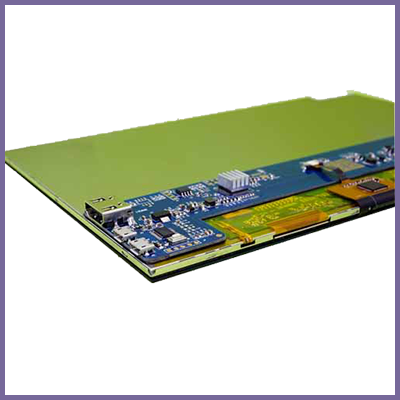
Small Format HDMI Modules, Innovatively Designed by CDS CDS introduce their newly launched range of Small Format HDMI Modules, designed with ease for our customers in mind Making Life Easier for our Customers, one step at a time CDS have launched a new range of Small Format HDMI Modules, ideal for solving any small display requirements and needs. With a HDMI input and optional touch, these HDMI modules are the best small format display solution out there. Key Features: easy to use and install small format HDMI input PCAP touch displays 4.3” ~ 10.1” low cost and quick delivery high quality and reliable IPS displays work directly with Windows 7/8/10 and X86 systems integrated 5 points capacitive touch with a G+G structure bar type option – wide extended temperature, ideal for automotive projects driver free and easy to operate – simply connect the USB port first to the HDMI LCD module, then connect the HDMI port to the TFT LCD. Small Format HDMI Modules for any application Our innovative HDMI displays can be suitable for any application including automotive, military, industrial control systems, gaming, commercial, kiosks, and more. With HDMI interface and USB power input interface our HDMI modules allow you to display high-quality images and videos from a variety of sources, including computers, media players, and game consoles. Our customers can quickly connect the HDMI TFT LCD display module into their design board and to connect to their computer with Win 7/8/10 and X86 system, Linux, Android, or connect Raspbian system. Benefits of a small HDMI LCD Module Firstly, our HDMI TFT LCD modules can easily be integrated with other devices via HDMI port and USB power input, such as PC, Ardunio, STM32, Raspberry, and more. Secondly, our HDMI TFTs have a high image quality, and flexibility in terms of size and resolution. Additionally, some HDMI TFT modules could offer capacitive touch-screen functionality or other advanced surface features that can enhance the user experience. They are also widely available and relatively affordable, making them a popular choice for professionals’ application. Want to order a quick sample from UK stock? Contact our sales team today. CLICK HERE FOR MORE SMALL FORMAT LCD DISPLAYS   Check Out Our Range of Small Format HDMI Displays! https://www.youtube.com/watch?v=TsPBEyQCCDk&t=1s Welcome to Crystal Display Systems Ltd https://www.youtube.com/watch?v=BnCu07hOmH4 Call us today +44 (0) 1634 791600 Send us an email for more information info@crystal-display.com
Industrial TFT Displays

Small Format LCD TFT Applications and Requirements

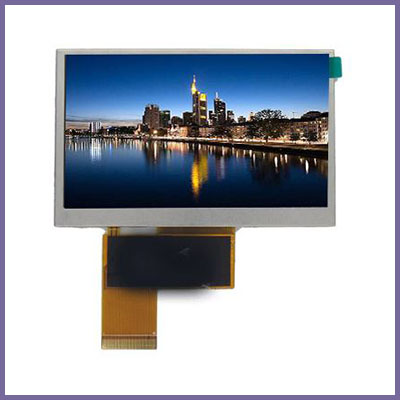
Small Format LCD TFT Applications and Requirements CDS has introduced a new range of small format LCD TFTs in various sizes and formats and have a display to fit most applications and requirements. Our product range is constantly being updated with all the latest display technology and innovations. We will only use tried and tested solutions from renowned manufacturers which is why our customers know they can trust our solutions. With such a vast array of options we ensure that the LCD TFT displays and LCD small screen (including POE display) we offer you is optimised for your specific application. See some examples of these below but for more information please Click Here for a wider range of the CDS LCD modules and monitors Other products from CDS include …. Stretched panels and monitors. Large format TFT LCDE Monitors. Display panel solutions. TFT, OLED, micro-LED panels & TFT modules. Touchscreens (with anti-bacterial coatings). Embedded Single Board Solutions. Industrial Computer / Motherboards. Computer On Modules. DRAM & Flash Storage Devices. Rugged & Mobile systems, Tablet Devices. Panel PC Solutions. Embedded Control Systems. Industry Specific Systems (Client Computing, Machine Vision, Marine, Medical etc). Click Here For More Information On Our Small Format TFT LCD Range Call us today +44 (0) 1634 791600 Send us an email for more information  info@crystal-display.com  
CDS ukraine logo
Industrial TFT Displays

Systems Integrator CDS Let you into their Secret World with their TFT Integration Guide

Systems Integrator CDS Let you into their Secret World with their TFT Integration Guide We share with our customers some behind the scenes information CDS’s guide to Integration of TFT displays and associated technologies CDS launch a TFT Integration Guide for 2022. As a systems integrator, CDS’s custom designs frequently require means of a visual output when customers use our build to order services. CDS can engineer the right visual solution befitting the application and the environment it is to be deployed within. Unlike other integrators, CDS are agnostic where specific display manufacturers are concerned – making use of direct and indirect relationships with an established supply chain built up over our 30 years + of existence that serves every need of our display design in processes. Without bias, we only select and use TFT’s & peripherals befitting to the application – which means we can meet the demands of the most challenging of applications where the deployment of displays & associated technologies is concerned. Factors such as physical profile, viewing angles, contrast and brightness constitute our considerations towards selecting the right choice of display for an industrial application. Viewing enhancement technologies such as TN, MVA or IPS also play their part in the narrowing down of our choice of solution. Displays & lifetime availability – make the right choice for your application It is inevitable that in an industrial display’s lifetime availability program, addressing an ‘end of life’ situation will need to be navigated at some stage. This is part & parcel of CDS’s provision around our ‘materials management services’ – which constitutes any product that CDS supply (issuing of EOL notifications to allow contingencies, the management of last time purchasing and advice & help in transferring to the next generation of product). However, it is worth noting in our TFT Integration Guide, that right from the start CDS will only ever advise display product where there is a good forward compatibility program – i.e., repeatability in dimensioning and physical attributes such as positioning of electrical & data connectors and tail positioning on the next generation of product. Lighting and Touch Controllers The majority of TFT solutions have pre-integrated integrated LED backlight drivers allowing for easier integration. However, where certain markets require a little more control and reliability, CDS can supply and integrate separate LED backlight drivers where they are needed. https://crystal-displaycom-staging.onyx-sites.io/products/interface-boards/ Embedded Computer and Panels PCs CDS’s core business is in the provision of embedded PC solutions – in all form factors with a multitude of performance levels. This goes hand in hand with CDS’s display integration services; as well as integrating the display and touchscreen with the required motherboard, CDS will also design and produce any peripheral supporting cabling (such as LVDS and backlight cabling) – customise the BIOS where needed and ensure extended operation with a customised embedded operating system for attended and non-attended applications. CDS also design & produce custom baseboards solutions for SOM/COM CPU modules – and design and produce custom power supplies and cooling solutions to thermally manage the overall solution. CDS Ruggedised Vehicle Satellite Navigational Unit with resistive touch display. https://crystal-displaycom-staging.onyx-sites.io/products/industrial-panel-pcs/ Which Touch Technologies? As with the electronic devices that we use on a day-to-day basis in our world of consumerism, it is almost impossible to get by without touch technology incorporated within industrial solutions. Today’s displays are much more than just display units. As HMI’s (human machine interfaces) they also interact & ‘feedback’ with the user’s interaction – which not only means CDS taking care of the correct selection of the display, but also the corresponding touch panel technology and controller solution. CDS’s in-house development team places a focus in ensuring the touch sensor, controller and firmware are perfectly aligned with each other. All requirements regarding gloved touch input and contact with water and dust are achieved – along with compliance for CE/EMC compatibility. All of which means that CDS also have a vast array of touch technologies at their disposal. In today’s world, human-machine (HMI) interaction is enhanced via the deployment of projected capacitive (PCAP/PCT) solutions – but resistive, SAW (surface acoustic wave) and infrared touch sensors all have their part to play if the application demands. Resistive Touch Resistive touch screens have remained integral parts of industrial applications due to their simple integration and, for that reason, remain a reliable and commercial attractive proposition for our customers. Whilst the continuing trend is for more & more applications go towards PCAP, tried and tested 4 and 5 wire resistive touch technology is still very much a valid for today’s demands – and for this reason, CDS still extensively adopt this touch methodology where the application allows. There are those industrial customers whose application does not necessarily require a more elaborate and expensive PCAP solution – where single input touch will easily suffice for what is needed. And the integration of the touch panel into the final application is simple; apply adhesive tape to the TFT, place the touch membrane on top – and the application is more complete (bar testing and calibration). Amongst other things, resistive touch solutions provide reliability, optimal price-performance ratios, simple integration, long-term availability – and their ability to be operated whilst wearing gloves and high service life – 10 million touch operations plus is not uncommon. Depending on your requirements, our touch panel designs can be achieved with many options – inclusive of anti-reflection or anti-glare (AR/AG) coatings, anti-fingerprint films and privacy filters.  https://crystal-displaycom-staging.onyx-sites.io/products/analogue-resistive-touch/ Projective Capacitive (PCAP) Projective capacitive (PCAP) touch screen technology provides many benefits including heightened touch sensitivity, a brighter and sharper display and multi-touch support to provide the user with a better over all feel & performance when comparing to other touch technologies. PCAP touchscreen technology is (generally) now used as the preferred method of interfacing with modern day consumer devices allowing for the aesthetically pleasing ‘edge to edge’ cover glass look and provision a more up to date feel. CDS can produce PCAP touchscreens in a variety of sizes – but for the practical/industrial used sizes

Circular LCD
Industrial TFT Displays

Circular LCD Display Range from Crystal Displays

Circular LCD Displays Circular LCD Display Range from Crystal Displays At CDS, we frequently receive requests for unique displays, so we’ve expanded our lineup to include circular LCDs alongside our square and stretched options. These versatile screens make a bold statement in digital signage and seamlessly fit industrial applications. A standout use case is in casino and gaming machines, where our circular monitors enhance aesthetics and attract players with their eye-catching design. What is a LCD Circular Display? A circular LCD display is a liquid crystal display (LCD) with a round screen instead of the traditional rectangular shape. Measured by diameter, it functions like standard LCDs but offers a unique form factor. Ideal for specialized digital signage, product design, and gaming machines, it provides design flexibility while maintaining full LCD capabilities. ENQUIRE NOW Product Specification Need a Quote? Contact Us Now Key Features of Circular Displays Circular Form Factor: Unlike traditional rectangular displays, circular displays have a round shape, offering a distinctive aesthetic that stands out in various applications. Versatility: Circular displays can be used in a wide range of applications, including digital signage, gaming machines, product design, and industrial environments. Unique Visual Presentation: The circular shape allows for unique visual presentations and content layouts, enhancing creativity and engagement in signage and advertising. Wide Viewing Angle: Many circular displays offer a wide viewing angle, ensuring that content remains visible and clear from various perspectives. High Resolution: Modern circular LCD displays often boast high-resolution screens, providing crisp and detailed images and text. Durability: Circular LCD displays are typically designed to withstand the rigors of continuous operation, making them suitable for commercial and industrial use. Customization Options: Manufacturers may offer customization options for circular displays, including size, resolution, brightness, and touchscreen capabilities, to meet specific project requirements. Integration Flexibility: Circular displays can be integrated into different devices and installations, offering flexibility in design and implementation. Customisation Options LED HALO Option As well as this monitor, CDS can also offer a halo edge lit circular display. Consisting of a 23.6” industrial grade circular panel with up to 1000 nits brightness and high 1280×1280 resolution. It has been designed and engineered from the bottom up for the gaming industry but can be used in any quirky commercial design install for instance, or for a specialist industrial application. Standard Option We offer a range of standard options that can be personalised to suit your needs. The CDS circular offering has 700 nits brightness and high contrast for the highest quality picture images. We can increase the brightness to 1,000 nits. Also with options for IP65 front faced, anti-glare or anti-reflective glass.  Input Options HDMI: High-Definition Multimedia Interface for digital video and audio transmission. DisplayPort: A digital display interface commonly used for connecting computers to monitors. VGA: Video Graphics Array, an analog standard for connecting displays to computers. Touchscreen Options Interactive touchscreen capabilities are accessible, leveraging cutting-edge PCAP touch technology. interactive touchscreen options are available, utilising the latest PCAP touch technology. CDS also offers for the large format circle displays drop in alternatives to Bestech monitors, Fantalooks displays, Elo touchscreens, Eurocoin monitors, all the Korean manufacturers as well as anyone you are using.  Just send us a data sheet. Need a Qoute? Contact Us Now Plug and Play Small Format Circular Displays CDS has always led the way in cutting-edge display technology, and we’re excited to expand our CircleVUE lineup with an all-new addition: compact circular Android displays. For years, CDS has offered small format circular LCD panels with HDMI input, primarily as components for system integration. Now, with the introduction of our new CircleVUE small circular displays, we’re meeting a clear market need—an all-in-one, ready-to-use circular solution that’s easy to operate and fast to deploy. Learn More Small Circle Android Product Specification Applications   Digital Signage: Ideal for retail, museums, and airports, showcasing ads, promotions, and directions with a bold, eye-catching design. Gaming Machines: Enhance slot machines and arcade games with dynamic visuals, game info, and bonus animations. Industrial Control Panels: Provide real-time monitoring and controls for machinery in industrial environments. Product Design: Used in smartwatches, fitness trackers, appliances, and automotive dashboards for innovative interfaces.   Special Events & Exhibitions: Create impact at trade shows, art installations, and themed events with interactive content and branded messaging. Hospitality: Modernize hotels, restaurants, and venues with digital menus, kiosks, and info displays. Transportation: Display routes, schedules, ads, and safety messages in vehicles and transit hubs. Education & Museums: Enhance interactive exhibits and presentations in museums and learning centers. [3d_viewer id=54143] SphereVUE We’ve combined technical expertise with cutting-edge LED technology to deliver a product that is as versatile as it is breathtaking. Click Here For More Information Download The Brochure Take a look at our small round displays A Round TFT (Thin Film Transistor) Panel refers to a display screen that has a circular shape, distinguishing it from traditional rectangular or square displays. TFT technology is commonly used in various electronic devices, including smartphones, tablets, and monitors, to produce high-quality, vibrant images.  LEARN MORE Check Out our Breathtaking Transparent Circular LED Display CDS has raised the bar with their Transparent LED Circular Solution, a groundbreaking display that seamlessly merges form and function. With diameters ranging from 1 meter to an impressive 3 meters, these circular displays cater to a spectrum of creative possibilities. Whether it’s a compact installation or a larger-than-life centerpiece, CDS’s circular solution can adapt to diverse spatial requirements. LEARN MORE Some of Our Other Displays Need More Information? CALL US +44 (0)1634 791600 CLICK TO EMAIL US!

Global component shortage
Industrial TFT Displays

Global component shortage for displays set to last until at least the end of 2022

Global component shortage for displays set to last until at least the end of 2022 The Global component shortage situation We wanted to give you a quick update on the global component shortage that is affecting displays and other products in this rapidly changing scenario and the issues we are all facing. With component manufacturing facilities at capacity, there is some hope as foundries are investing in new facilities and doing it quickly including the construction of massive facilities happening very quickly indeed. BUT it will take time for these new foundries to get up to speed and deal with the backlog of demand. This has meant that prices and lead-times are changing on an almost daily basis, components that had been anticipated to continue for several years are being made end of life with little or no notice creating real issues in the global display and touchscreen markets. What CDS are actively doing about it CDS is working very closely with our manufacturing partners and factories, who are putting in a huge amount of effort to try to secure TFT panels, interface boards, touchscreens, panel PC and the driver ICs needed for all those products to keep shipping schedules on time and reduce any delays that may become evident. Now there are constant negotiations and bartering to get the best allocation of product that we possibly can, and our factories are doing their best to secure all the stock they and we require. The global impact of this significant supply and demand shift means that CDS customers (like all other display customers) may experience several price rises, extended lead-times, and last-minute delays to shipments. This is not the way we want to do business, but it really is out of our control, although with our operations teams in the Far East and Europe, we are very closely monitoring the situation with chip suppliers and our own manufacturing partners and factories and are quick to react when things change to keep disruption to an absolute minimum for our customers. We hope this update helps to keep you in the loop but if you have any specific questions, please ask your CDS account manager or any one of our logistics team, but the sooner we can receive your orders and get them in the system the greater chance of no issues with supply, so if you can help us with that it would really help. Thank You. FOR OUR COMPONENTS CLICK HERE Call us today +44 (0) 1634 791600   Send us an email for more information info@crystal-display.com
CDS High-Resolution LCDs
Industrial TFT Displays

New Generation of High-Resolution LCDs 7-inch and 13.3-inch Full Array Local Dimming TFT Modules

Crystal Display Systems Limited has added its new generation of High-Resolution LCDs CDS highlight two models from the high-resolution LCDs range, the 7” and 13.3”. Both sizes are high resolution, high brightness, ultra-high contrast ratio, the 7” has wide operating temperatures, and wide viewing angle IPS technology. They also have the excellent next generation FALD (Full Array Local Dimming) capability with an amazing 100% colour gamut, which when combined with its in-cell touch technology results in the most incredible latest display solutions available. 13.3” Diagonal High-Resolution LCDs 3840 x 2160 Pixel resolution TFT Interface: 4 Lane eDP with 5.4Gbps Link Rates Wide viewing angle (u/d/l/r): TYP 89°/89°/89°/89° (IPS Technology) Contrast Ratio = 10 milllion:1 Typ. Brightness with PCAP = 2000 cd/m2 (1296 Full Array Local Dimming) Typ Backlight lifetime: 50,000 hours. Touch Screen = In-Cell with Cover Glass Operating Temperature: 0 +50O Outer Dimensions: 326.00(W) x 207.9(H) x 21.06(D) (Including In-Cell Touch and Cover Glass) CLICK HERE FOR THE FULL TABLE OF FALD AND HIGH-RESOLUTION LCDS OFFERINGS CLICK HERE FOR EVEN MORE IMPRESSIVE  SMALL FORMAT DISPLAYS 7” Diagonal FALD Displays 1200 x 1920 Pixel Resolution (Native Landscape) MIPI Interface Wide viewing angle (u/d/l/r): TYP 89°/89°/89°/89° (IPS Technology) Contrast Ratio = 1300:1 typ. Brightness with PCAP = 1800cd cd/m2 (360 Full Array Local Dimming) typ Backlight lifetime = 50,000 hours Touch Screen technology = In-Cell Operating Temperature = -20 +70O Outside Dimensions = 162.72(W) x 104.00(H) x 9.44(D) (Including the In-Cell Touch) Some of yours questions are covered here: 1. Is the 7″ display really with 1200×1900 native resolution? Answer: Yes, it is, and it’s the LTS’s proprietary LCD cell with In-Cell Touch! What a unique display, right? 2. Is LTS able to make the contrast ratio higher than 1,300:1? Answer: Yes, a contrast ratio more than 1,000,000:1 is not a dream which display is powered by LTS’s FALD (Full Array Local Dimming) backlighting technology. 3. What do you mean by the brightness at 1,500+ cd/m2? How much higher are you able to achieve on the brightness? Answer: Well, what about 2,500 cd/m2 on a 7″ display? We do have variants with the 7″ display, and the 2,500 cd/m2 is one of them. Please contact our technical sales team to discuss your project and requirements to see if these sizes or any other displays in our “CL range” with its ultra-high colour Gamut and Full Array Local Dimming (FALD) backlighting system etc. CLICK HERE FOR THE FULL RANGE OF UNIQUE CHARACTERISTIC DISPLAYS Call us today +44 (0) 1634 791600   Send us an email for more information info@crystal-display.com

Scroll to Top