OLED Displays

amoled displays
OLED Displays

New Range of 4K AMOLED Displays: Introducing Ingenious Visuals

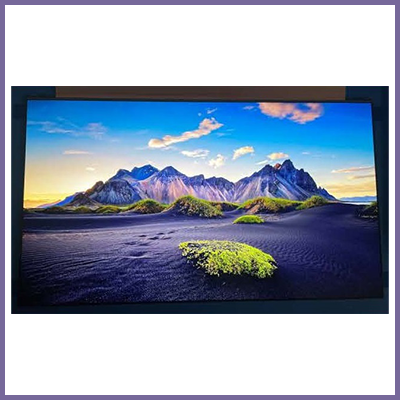
New Range of 4K AMOLED Displays: Introducing Ingenious Visuals Experience breath-taking colour reproduction and unparalleled clarity with our latest 4K AMOLED Displays. 4K AMOLED Displays are here to offer you unmatched resolution, colour accuracy, and immersive viewing experiences. We are thrilled to unveil our latest range of AMOLED Displays, including modules with 4K resolution. Our AMOLED range has been meticulously crafted to meet the demands of various industries, from automotive to aerospace and military applications. Our Range of AMOLED Displays Size Resolution Touch Outline Size Active Area Viewing Angles Contrast Ratio Brightness Interface Operating Temp 11.2″ 2560(RGB) x 1536 Oncell CTP 249.22(H) x 154.08(V) x 0.96(D)mm 244.22(H) x 146.53(V)mm 80/80/80/80 1000:1 450cd/m2 MIPI Dual Port D-PHY Interface -20C~+70 12.8″ 1728(RGB) x 1888 Oncell CTP 224.76(H) x 248.02V) x 1.291(D)mm 218.76(H) x 239.021(V)mm 80/80/80/80 100,000:1 600cd/m2 LVDS Interface -40C~+85C 13″ 2560(RGB) x 1440 Oncell CTP 292.6944(H) x 168.2656(V) x 2.096(D)mm 286.6944(H) x 161.2656(V)mm 80/80/80/80 1000:1 800cd/m2 eDP 1.2 Interface -40C~+85C 14.5″ 3000(RGB) x 1876 Oncell CTP 325.6(H) x 208.59(V) x 2.3(D)mm 312.30(H) x 195.2916(V)mm 80/80/80/80 60,000:1 550cd/m2 MIPI 2-Port D-PHY Interface -20C~+70C 15.1″ 2560(RGB) x 1600 No 328.896(H) x 210.46(V) x 1.296(D)mm 324.096(H) x 202.56(V)mm 85/85/85/85 5000:1 800cd/m2 eDP 1.2 Interface -40C~+85C 15.6″ 3840(RGB) x 2160 No 348.48(H) x 201.62(V) x 1.05(D)mm 344.2176(H) x 193.6224(V)mm 80/80/80/80 1000:1 520cd/m2 eDP 1.4b Interface -20C~+70C 27.0” 3840(RGB) x 2160 No 607.66(H) x 348.18(V) x 1.24(D)mm 597.6576(H) x 336.1824(V)mm 85/85/85/85 1000:1 400cd/m2 eDP Interface -20C~+70C A preview of each star in the AMOLED range Let’s delve into the specifications of our ground-breaking AMOLED line-up: KD112WQFEN001 – 11.2” AMOLED With a remarkable resolution of 2560 x 1536 and a billion-colour palette, this display ensures stunning visuals in a compact form factor, ideal for space-constrained environments. KD128FSFLN004 – 12.8” AMOLED: Featuring an impressive contrast ratio of 100,000:1 and LVDS interface, this display excels in delivering deep blacks and vibrant colours, making it perfect for demanding industrial applications. KD130UXFED001 – 13.0” AMOLED: Boasting a brightness of 800cd/m2 and eDP 1.2 interface, this display offers excellent readability even in bright ambient conditions, making it suitable for outdoor usage. Elevate every detail with the precision and brilliance of AMOLED KD145OLEDN003-C003A – 14.5” AMOLED: With its high resolution of 3000 x 1876 and wide colour gamut, this display provides exceptional clarity and colour accuracy, catering to the needs of graphic-intensive applications. KD151WQFEN001 – 15.1” AMOLED: Designed for critical viewing tasks, this display offers a contrast ratio of 5000:1 and eDP 1.2 interface, ensuring precise image reproduction for professional applications. KD156UHFEN018 – 15.6” 4K AMOLED Displays: Featuring a stunning resolution of 3840 x 2160, this display delivers lifelike visuals with its wide colour palette, making it perfect for multimedia and gaming enthusiasts. KD270UDFEA003 – 27.0” 4K AMOLED Displays: With a massive screen real estate and 100% colour gamut, this display offers an immersive viewing experience for various commercial and industrial applications. Click here for our industrial small OLEDs Conclusion Industries such as automotive, aerospace, and military can benefit immensely from implementing AMOLED and 4K AMOLED Displays. With their unparalleled resolution, colour accuracy, and durability, these displays elevate visual experiences to new heights, enabling enhanced productivity, efficiency, and safety across diverse applications. Embrace the future of visual technology with our revolutionary 4K AMOLED Display options. Check Out Some Of Our Displays in Action https://www.youtube.com/watch?v=L0p9FGdFavMhttps://www.youtube.com/watch?v=BDFd4qQKF0U Need More Information? CALL US +44 (0)1634 791600 CLICK TO EMAIL US!
cds specialist UHD OLEDs
OLED Displays

UHD OLEDs: CDS Introduce their range of 10 bit Long Life OLEDs

UHD OLEDs: CDS Introduce their range of 10 bit Long Life OLEDs specialist UHD OLED displays, ideal for automotive / aerospace / military etc. applications. CDS have decided to launch a new range of UHD OLEDs, cutting-edge OLED displays which have undergone rigorous process technology enhancements, ensuring top-notch performance and longevity for industrial applications. Unmatched Resolution and Contrast CDS’s UHD OLEDs boast an impressive resolution and contrast that redefine visual experiences. With a stunning 4K resolution of 3840×2160 and a contrast ratio of 1M:1, every detail is vividly rendered, bringing images to life with unparalleled clarity and depth. Enhanced Features for Diverse Applications The versatility of CDS’s UHD OLEDs is evident in their range of sizes and optional touch functionalities. From the compact 13.1″ display to the expansive 27″ option, there’s a perfect fit for various industrial settings. Whether it’s for control panels, medical equipment, or interactive displays, these OLEDs deliver exceptional performance. Sizes Available Size Touch Active Area (mm) Outer Dimension OLED (mm) 13.3″ On-Cell 293.76 x 165.24 298.75 x 170.54 x 3.7 / 0.93 15.6″ Optional 344.21 x 193.62 348.22 x 203.02 x 5.2 / 1.94 18.5″ On-Cell 409.54 x 230.26 417.54 x 237.95 x 3.69 / 0.483 21.6″ Optional 478.08 x 268.92 488.08 x 278.92 x 5.535 / 1.259 27″ Optional 597.66 x 336.18 607.66 x 348.18 x TBD / 1.204 Longevity and Reliability One of the standout features of CDS’s UHD OLEDs is their long-life support of over 5 years, ensuring prolonged usage without compromising on quality. Moreover, the inclusion of a de-burn algorithm safeguards against image retention, guaranteeing consistent performance over time. Coupled with the eDP interface, these displays are engineered for reliability in demanding environments. Click here for our full range of small OLED displays Conclusion Here at CDS, we would highly recommend this new range of OLEDs for any industrial application, including automotive / aerospace / military.  From the impeccable resolution and contrast to the advanced features designed for longevity and reliability, these OLEDs exemplify innovation at its finest. Whether it’s for industrial control systems, digital signage, or immersive gaming experiences, CDS’s UHD OLEDs promise to deliver unparalleled visual excellence for years to come. 10 bit UHD OLEDs Size Parameter specification All Resolution 3840 x 2160 All Luminance 400 cd/m² All Contrast Ratio 1M:1 All Gamut Coverage 99% DCI-P3 All Temperature Range -20C to +70C Check Out Some Of Our Displays in Action Need More Information? CALL US +44 (0)1634 791600 CLICK TO EMAIL US!
3.12 inch oled blog
OLED Displays

Elevating Visual Excellence: Unveiling the Power-Packed 3.12 inch OLED Display

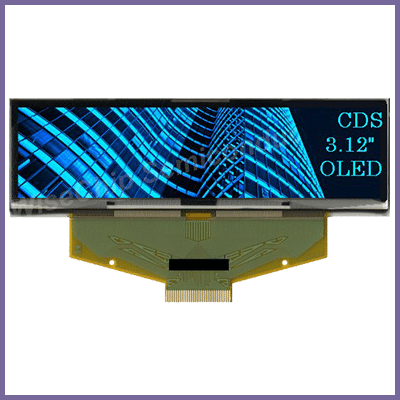
Elevating Visual Excellence: Unveiling the Power-Packed 3.12 inch OLED Display Our compact Chip-On-Glass display packs a powerful punch for all applications The 3.12″ OLED display at the forefront of Innovation In the dynamic realm of display technology, a groundbreaking solution has emerged to redefine the standards of visual excellence. Our 3.12″ OLED display, with its 256×64 resolution, stands at the forefront of innovation, proving to be the quintessential choice for a myriad of industrial, automotive, aerospace, and military applications. Compact and Powerful: A Display Revolution Measuring a mere 88.0(H)x27.8(V)x2(D)mm and weighing only 9.95g, this Chip-On-Glass (COG) display packs a powerful punch in a compact form factor. The active area of 76.78(H)x19.18(V)mm ensures a generous canvas for vibrant and detailed visual content. Optimal Performance in Any Environment One distinguishing feature of our 3.12″ OLED is its impressive operating temperature range of -40°C to +85°C, making it a robust solution for diverse environments. Whether it’s the challenging conditions of an industrial setting, the rigors of automotive applications, or the demanding requirements of military use, this display is designed to excel. Crystal-Clear Visuals: A Feast for the Eyes Boasting near 180° viewing  angles on all axes, the OLED display ensures that your visuals captivate from every angle. The super-fast response time of <10µs adds a dynamic dimension to graphics, creating an immersive and engaging user experience. Contrast That Commands Attention With a remarkable 10,000:1 contrast ratio, the OLED display delivers visuals that pop with precision and clarity. Its innate ability to perform exceptionally well in both darkness and full sunlight renders it suitable for a spectrum of applications, be it indoors or outdoors. Interface Flexibility: Tailored for Developers Developers have the flexibility to choose between 3/4 wire SPI or parallel interface options, providing a seamless integration experience. Additionally, the display is available in light blue, yellow, white, or green colour options, each offering 16 levels of grayscale for customization according to specific design requirements. Conclusion: Where Innovation Meets Display Excellence In conclusion, our 3.12″ OLED display emerges as a powerhouse, pushing the boundaries of what’s possible in display technology. Its compact design, broad operating temperature range, and exceptional visual performance make it the ideal choice for those seeking innovation in industrial, automotive, aerospace, and military applications. Elevate your visuals, choose the 3.12″ OLED display for an unparalleled display experience. CLICK HERE TO SEE OUR RANGE OF OLED DISPLAYS Want more information on our oLEDs? contact us now info@crystal-display.com +44 (0)1634 791 600

OLED Displays

CDS Introduces 2 New Small Format OLED Displays

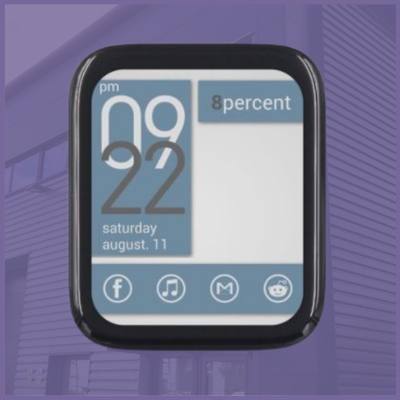
CDS Introduces 2 new small format OLED Displays CDS has introduced a number of specialist small format OLED displays For those that have not worked with OLED (Organic Light Emitting Diodes) before it is a flat light emitting technology, made by placing a series of organic thin films between two conductors. When electrical current is applied, a bright light is emitted. OLEDs are emissive displays that do not require a backlight and so are thinner and more efficient than LCD displays (which do require a white backlight). How does OLED compare to LCD for industrial applications? When comparing OLED and LCD for industrial applications, OLED displays excel in image quality with true blacks, vibrant colors, and wider viewing angles. They are energy-efficient, making them suitable for scenarios prioritizing power consumption. However, OLEDs may be susceptible to burn-in, and their manufacturing cost is generally higher. On the other hand, LCDs offer cost-effectiveness, longer lifespans, and resilience to temperature variations, making them a practical choice for industrial settings with budget constraints and varying environmental conditions.  Key Features Versatile Applications: CDS has carefully designed these OLED displays to cater to a wide range of applications. From handheld devices and medical equipment to automotive displays and wearable technology, the versatility of these displays opens up new possibilities for product designers and manufacturers. The ability to integrate these displays seamlessly into various devices makes them a versatile choice for industries seeking to enhance user interfaces and overall product aesthetics. Advanced Technology: The small format OLED displays incorporate the latest advancements in display technology. This includes features such as high refresh rates, low power consumption, and wide viewing angles. Whether used in indoor or outdoor settings, these displays are engineered to perform optimally in diverse environments, ensuring a consistent and reliable user experience. Customization Options: Recognizing the diverse needs of its customers, CDS offers customization options for these OLED displays. This includes variations in size, shape, and functionality, allowing clients to tailor the displays to their specific requirements. This commitment to customization ensures that the displays seamlessly integrate into a variety of applications, providing a bespoke solution for every customer. Environmental Considerations: In line with the growing emphasis on sustainability, CDS has implemented eco-friendly practices in the manufacturing of these OLED displays. By utilizing energy-efficient components and materials, the displays contribute to reducing their environmental footprint. This aligns with CDS’s dedication to responsible manufacturing practices and reinforces the company’s commitment to corporate social responsibility. CDS offers a wide range with just three examples below of our OLED displays We offer those from sizes as small as 0.39 inch up to 5.50 inch offering excellent benefits for specific requirements. These can include Chip On flex (COF) or Chip On Glass (COG), wide temperature range, flexible OLED, transparent OLED, circular OLED, but also touchscreen (including in-cell touch) is also an option and is popular on the 5.5” for example. Crystal Display Systems has once again positioned itself at the forefront of display technology with the introduction of these two new small format OLED displays. Combining compact design with advanced features, these displays offer a compelling solution for industries seeking to enhance their products with high-quality visual interfaces. As technology continues to advance, CDS remains at the forefront, driving innovation and setting new standards for display excellence. Contact Us info@crystal-display.com +44 (0)1634 791 600

NEW BROCHURE SMALL FORMAT
Industrial TFT Displays, OLED Displays

Unveiling Innovation: Explore the New CDS Small-Medium LCD Capability Document

Unveiling Innovation: Explore the New CDS Small-Medium LCD Capability Document CDS, at the forefront of display technology, proudly introduces its latest offering – the CDS Small-Medium LCD Capability Document. This comprehensive brochure showcases a range of cutting-edge displays, from monochrome passive displays to PMOLED, TFT LCD, TFT bar-stretched displays, sunlight-viewable TFT displays, custom designs, and embedded smart TFT displays. Monochrome LCD Displays The Monochrome LCD display series in the capability document features a diverse product lineup, including alphanumeric and graphic STN & FSTN LCD modules. Ranging from 2×8 to 4×40 displays, these modules cover industry-standard formats and accommodate larger characters and extended temperature ranges. Offering reflective or LED-backlit options, along with choices of transflective positive or transmissive negative modes, these displays provide flexibility and customization. The graphic series boasts resolutions from 122×32 to 320×240 QVGA, with integrated ICs for easy interfacing and additional features like touch screens, polarizer options, and various LED backlight colours. CLICK HERE FOR MORE INFO Colour TFT Displays The industrial display lineup encompasses TN and IPS TFT screens, ranging from 0.95” to 49.0”. Covering standard sizes, formats, and specifications, the series includes versatile bar, stretch, round, and square models. High-brightness options ensure sunlight visibility, while ultra-wide temperature and viewing angle versions cater to diverse industrial needs. Supporting capacitive and resistive touch options, with various display interface options such as MCU, SPI, MIPI, RGB, LVDS, HDMI, and USB-C, this collection meets the demands of a wide range of applications. CLICK HERE FOR MORE INFO PMOLED Displays The PMOLED display lineup within the capability document offers monochrome, area colour, and full-colour modules. Monochrome and area colour options range from a petite 0.19″ to a substantial 5.5″, while the full-colour range includes modules starting at 0.95″ and going up to 1.69″. PMOLED, being an emissive technology, requires no backlight and provides excellent optics with wide viewing angles, a 10,000:1 contrast ratio, rapid switching (<10µs), and an operating temperature range of -40°C to +85°C. This makes PMOLED ideal for industrial, medical, and automotive applications. CLICK HERE FOR MORE INFO In conclusion, CDS continues to lead the way in display innovation, offering a diverse and versatile range of displays for various industries. The Small-Medium LCD Capability Document is a testament to CDS’s commitment to providing cutting-edge solutions that cater to the evolving needs of the market. Download our new brochure today and explore the possibilities with CDS displays, where technology meets vision. CLICK HERE TO DOWNLOAD THE BROCHURE Want more information? contact us now info@crystal-display.com +44 (0)1634 791 600

Industrial TFT Displays, OLED Displays

How do LCD TFT Displays and OLED displays work?

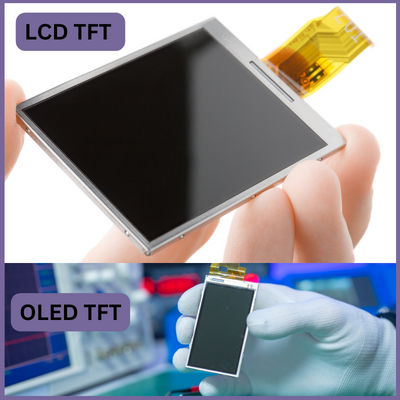
How do LCD TFT Displays and OLED Displays Work? How do the Different Types of Component Displays work? Monochrome Liquid Crystal Displays (LCDs) are composed of two glass panels with electrodes printed on the interior surfaces. Encased between these glass layers is a liquid crystal (LC) organic fluid. When the LCD is in its “off” state, meaning no voltage is applied, light passes through the display. However, in the “on” state, when voltage is applied, the LC fluid twists in response to the electric field, resulting in the blocking of light and the creation of dark areas on the LCD. By selectively applying voltage to the electrodes, various patterns can be generated. It’s important to note that LCDs are passive displays, meaning they do not emit their own light. Instead, they rely on ambient light in the surroundings or backlight illumination from sources like LED, Electroluminescent (EL), or Cold Cathode Fluorescent Lamp (CCFL) lighting. LCD Backlighting An LCD essentially functions as a reflective surface and requires a light source to make the displayed content visible. This can be achieved by utilizing available ambient light or by adding a backlight source positioned behind the LCD. There are several backlighting options available, but the primary three are as follows: 1. Electroluminescent (EL) Backlighting: EL backlights are extremely thin, lightweight, and provide consistent illumination. They come in various colors, with white and turquoise blue being the most popular choices for LCDs. Although their power consumption is low, they require voltages in the range of 80-100VAC, which are typically supplied by an inverter converting a 5, 12, or 24VDC input to AC output. ELs have a relatively low brightness of 15-20cd/m² and a limited lifespan of 10,000 to 15,000 hours to reach half brightness. 2. Light Emitting Diode (LED) Backlighting: LEDs have become the top choice for backlighting LCDs. They are available in a wide range of colors, including white and blue, and offer high brightness levels with a long operational life, typically ranging from 25,000 to 50,000 hours, depending on the color. These solid-state devices operate directly off 2-5VDC, though a current limiting resistor is advisable for LED protection. LEDs are either mounted in an array directly behind the LCD or along one edge within a diffuser assembly. 3. Cold Cathode Fluorescent Lamp (CCFL) Backlighting: CCFL backlighting offers low power consumption and produces a bright white light. Typically, CCFL lamps are positioned along the edges of the LCD with a diffuser assembly to evenly distribute the light across the rear of the display. CCFL lamps require 270-300VAC, supplied by an inverter that converts 5, 12, or 24VDC input to AC. Viewing Modes LCDs are available in three fundamental light transmission modes: Reflective Mode: This mode utilizes available or ambient light to illuminate the display by incorporating a reflector along with the rear polarizer. Reflective LCDs are best suited for outdoor or well-lit environments. Transflective Mode: Transflective LCDs combine reflective and transmissive features, with the rear polarizer having partial reflectivity. They are designed to be used with a backlight for visibility in all lighting conditions. Transmissive Mode: In this mode, LCDs have a transparent rear polarizer and do not reflect ambient light. To view the display, the backlight must be active at all times. This mode is most effective in low-light or dark conditions. OLED (Organic Light-Emitting Diode) Displays: Organic Materials: OLED displays use organic compounds that emit light when an electric current is applied. These organic materials are sandwiched between two electrodes, usually one being transparent. No Backlight: Unlike LCD displays, OLED displays do not require a separate backlight. Each pixel in an OLED display emits its own light. Pixel Control: OLEDs are capable of pixel-level control. When an electric current is applied to a specific pixel, that pixel emits light, while neighboring pixels remain dark. Color Emission: OLED displays can produce colors by using different organic materials that emit light at different wavelengths. Red, green, and blue subpixels can be combined to create a full range of colors. Flexible and Thin: OLED displays are thin and lightweight, and they can be made flexible, allowing for curved and foldable displays. Fast Response Time: OLEDs have a fast response time, making them suitable for applications where fast motion is involved, such as in gaming. Colour LCD (CSTN Liquid Crystal Display)CSTN, colour super-twist nematic or passive LCD utilizes the same technology principles as Monochrome LCD (please see previous text) however instead of one dark pixel, with the use of colour filters each pixel in a CSTN display is broken down into a group of three dots, one red, one blue and one green generally arranged in a stripe formation. The LCD drive electronics applies a varying voltage depending on the colour required to all three coloured dots which untwist the liquid crystal allowing the exact amount of light through on each coloured dot to give the desired colour or shade. CSTN LCD can offer a maximum colour palette of 65k colours and are ideal for industrial applications requiring colour but not necessarily requiring extremely fast moving images. Colour TFT LCD (Thin Film Transistor)Thin Film Transistor LCD basically describes the control elements that actively control the individual pixels, which has coined the term “Active Matrix LCD”. Each pixel is again broken down into three dots, red, green and blue which are produced by colour filters and are arranged in either a stripe or delta formation, each dot is driven by one transistor i.e. three transistors per one pixel. The liquid crystal in its “off” state no voltage applied will block all light coming through from the backlight, but when a voltage is applied across the liquid crystal elements they twist by up to 90° allowing a level of light through, the transistors control this degree of twist and hence the intensity of the red, green and blue elements of each pixel forming the image on the LCD. TFT LCD are ideal for all applications requiring fast switching colour images. OLED (Organic Light-Emitting Diode)The basic structure

Industrial TFT Displays, OLED Displays

NEW 13″ OLED Display

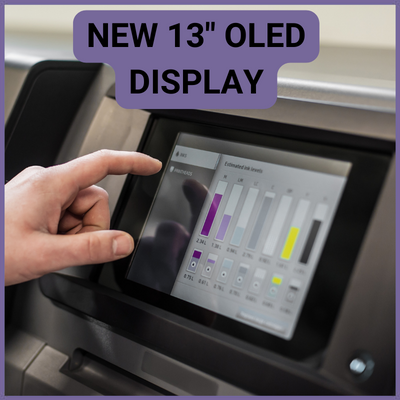
NEW 13″ OLED Display A Game-Changer in the Industrial World In the ever-evolving landscape of industrial technology, one company stands at the forefront of innovation—Crystal Display Systems (CDS). Known for their commitment to excellence and cutting-edge solutions, CDS has once again pushed the boundaries with their new 13-inch OLED Industrial Display. Industrial displays have traditionally relied on TFT LCD technology. While these displays have served a wide range of applications effectively, the 13-inch OLED Industrial Display from CDS promises to redefine the industry. OLED, or Organic Light-Emitting Diode, technology offers a host of advantages that are poised to transform the industrial landscape. CLICK HERE TO DOWNLOAD OUR NEW 13INCH OLED SPECIFICATION SHEET What are the advantages and benefits of a 13” industrial OLED display compared to other technologies such as TFT LCD? A 13″ industrial OLED (Organic Light-Emitting Diode) display offers several advantages and benefits compared to other technologies like TFT LCD (Thin-Film Transistor Liquid Crystal Display). Here are some of the key advantages: Higher Contrast Ratio: OLED displays have an emissive technology, meaning each pixel emits its light. This results in perfect black levels and higher contrast ratios when compared to TFT LCDs, which rely on a backlight. Wider Viewing Angles: OLEDs typically provide wider viewing angles, maintaining image quality even when viewed from the side. In contrast, TFT LCDs may experience color shifting and reduced visibility at extreme angles. Faster Response Time: OLED displays have faster response times, reducing motion blur and ghosting, making them ideal for applications requiring fast-moving content such as gaming or video playback. Thinner and Lighter: OLEDs are thinner and lighter because they don’t require a backlight unit, which is essential in TFT LCDs. This makes OLED displays more suitable for applications where weight and thickness are critical factors. Energy Efficiency: OLEDs are energy-efficient. They only consume power when pixels are active, unlike TFT LCDs which use a constant backlight. This can lead to energy savings, especially in battery-powered devices. Flexibility: OLED technology allows for flexible and even transparent displays, which can be beneficial for unique form factors or integration into curved or non-flat surfaces. TFT LCDs are typically rigid. Color Accuracy: OLEDs often deliver more vibrant and accurate colors due to their self-emissive nature, whereas TFT LCDs can sometimes suffer from color inaccuracies. Instant On/Off: OLEDs have an instant response time and can be turned on and off rapidly. In contrast, TFT LCDs may have a slight delay when powering up or down. However, it’s essential to consider some limitations and factors: Durability: OLEDs can be more susceptible to burn-in over time if static images are displayed for extended periods. TFT LCDs are less prone to this issue. Lifetime: OLEDs may have a shorter lifespan than TFT LCDs, especially in terms of blue pixel degradation. This can be a concern for industrial applications that require long-term use. Cost: OLED displays are typically more expensive to manufacture than TFT LCDs, which might affect the overall cost of the equipment. Brightness: In extremely bright environments, TFT LCDs with high brightness levels may outperform OLEDs. In summary, a 13″ industrial OLED display offers superior contrast, wider viewing angles, faster response times, and flexibility when compared to TFT LCDs. However, it may have limitations in terms of durability, lifespan, and cost that need to be considered when selecting the technology for a specific industrial application. When customers knew that we CDS have been offering Industrial AMOLED displays powered by the latest technology, typically they would ask a few questions as below. Do you have an OLED that works for automotive applications? Are you able to make the OLED brightness higher than 400 nits for outdoor use? How do you mitigate burns in OLED to protect pixels from overuse? Well, we do know your concerns and have the OLEDs available like the one shown in the link below. CLICK HERE TO SEE OUR SMALL INDUSTRIAL OLED DISPLAY PAGE Want more information on our OLED Displays? Contact Us now info@crystal-display.com +44 (0)1634 791 600

Scroll to Top